Web Application Firewall

Hello there ! Myself Sanika Patil. I'm currently pursuing a diploma in 3rd year in computer engineering at Government Polytechnic Mumbai.
What's Web Application Firewall (WAF)?
A Web Application Firewall (WAF) is a security system that monitors and filters HTTP/HTTPS requests to and from a web application. It acts as a barrier between a user's browser and the web server, analyzing each incoming request and blocking potential threats, such as SQL injection, cross-site scripting (XSS), and other web-based attacks.
How Does a WAF Work?
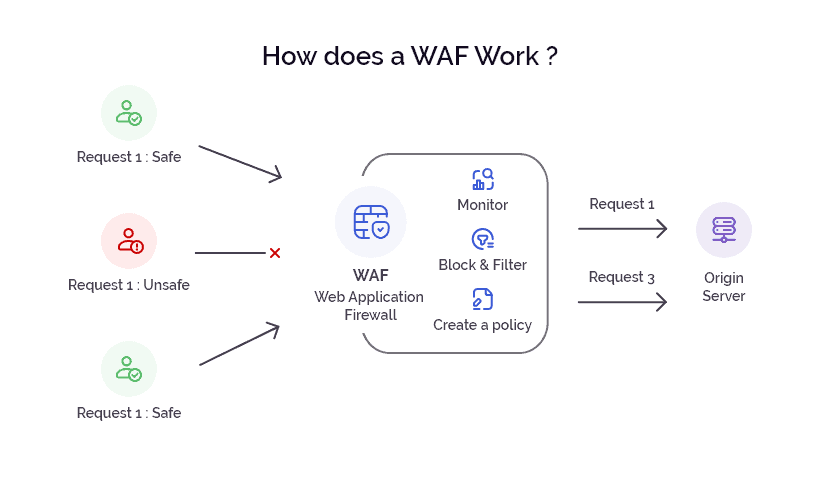
WAF works by examining the HTTP traffic flowing between a client and a web server. It uses predefined rulesets or custom rules to analyze requests and responses. Upon detecting malicious patterns or suspicious behavior, it blocks or filters out the harmful traffic, thereby protecting the web application from various cyber threats.
A Web Application Firewall (WAF) serves as a critical defense mechanism for web applications. Positioned between users and web servers, it's like a vigilant sentry scrutinizing all incoming traffic. Its primary job is to meticulously inspect every request that comes its way, examining the data, headers, parameters, and other aspects of the communication.
Using a predefined set of rules or algorithms, the WAF identifies patterns or behaviors that match known attack signatures or suspicious activities common to cyber threats. This could include techniques like SQL injection, cross-site scripting (XSS), or attempts to exploit known vulnerabilities within web applications.
Once the WAF detects such malicious behavior or potential threats, it takes immediate action to neutralize them. This action might involve blocking the suspicious request, redirecting it away from the application, or raising an alert to notify system administrators about the potential security breach.
Types of WAF
Types of WAF:
1. Network-based WAF: Operates at the network perimeter, analyzing traffic between clients and servers. It inspects incoming and outgoing traffic to and from the web application. Network-based WAFs are typically hardware appliances or software solutions placed in front of the web servers, often as part of a larger network security setup.
2. Host-based WAF: Operates on individual servers where the web applications are hosted. It's installed directly on the server hosting the web application and protects that specific server. Host-based WAFs offer more granular control and can better understand the nuances of the application, but they may require installation on each server.
3. Cloud-based WAF: Cloud-based WAFs are a type of WAF service that operates in the cloud, providing web application security without the need for on-premises hardware or software installation. Hosted in the cloud by a third-party provider, this type offers scalable security solutions. It protects web applications without requiring on-premises hardware.
Conclusion
WAFs, or Web Application Firewalls, are essential security tools that protect web applications from various cyber threats by filtering and monitoring incoming traffic. They offer customization, real-time threat protection, and an additional layer of defense against attacks like SQL injection and cross-site scripting. They're crucial for safeguarding web applications from vulnerabilities.